Skip to content
Magbanua Retrial trial-day trial-day Georgia CapplemanTara Kawassjury_instructionsclosing_argumentrebuttal_closingverdictDay 8 - May 27, 2022 Judge Wheeler read final jury instructions, both sides delivered closing arguments, and the jury returned guilty verdicts on all three counts — first-degree murder, conspiracy, and solicitation — after requesting an exhibit inventory and a playback of the Dolce Vita recording during deliberations.
← Day 7 Magbanua Retrial

Day 8 - May 27, 2022

Closing Arguments, Deliberations, and Verdict

Judge Robert R. Wheeler
9 Proceedings
4 Pages
0 Witnesses
1,010 Lines
Day 8 of 8
Appearing:

Judge Wheeler read final jury instructions, both sides delivered closing arguments, and the jury returned guilty verdicts on all three counts — first-degree murder, conspiracy, and solicitation — after requesting an exhibit inventory and a playback of the Dolce Vita recording during deliberations.

Full day summary

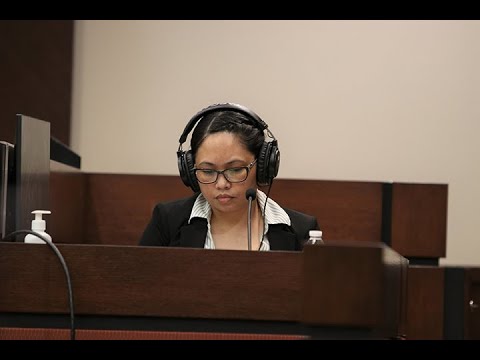
Day 8 opened with a minor correction to the verdict form and distribution of jury instruction copies before Judge Wheeler read the full set of final instructions. Two instructions carried direct weight given the trial record: the principals doctrine variant applying to defendants who paid others to commit crimes — the legal mechanism enabling Magbanua's liability despite her absence from the murder scene — and the accomplice-witness caution requiring heightened scrutiny of testimony from witnesses seeking favorable treatment from the State, a standard squarely applicable to Rivera. Chief Assistant State Attorney Georgia Cappleman argued the prosecution's closing over approximately two hours, organizing the case around two converging investigative paths: the Prius that led police to Garcia and Rivera, and the Adelson family's custody-driven motive, with Magbanua as the single link between them. She opened with before-and-after photographs of Dan Markel, then worked through the rental car timing, cell phone patterns, post-murder cash deposits, Adelson Institute paychecks that began two months after the killing and stopped the day Garcia was arrested, and the Dolce Vita recording and subsequent wiretap calls. On Rivera's credibility, she argued his criminal background was part of why he was selected, and that details he supplied — Markel's departure-day deadline, a shot through the Prius floor — were independently verifiable and absent from police reports. She invoked the principals doctrine through a gun analogy — Garcia as the bullet, Charlie Adelson as the trigger finger, Magbanua as the gun — and closed by urging the jury to apply common sense and reject speculative doubt. Defense co-counsel Tara Kawass anchored her closing in a wrongful-prosecution theory: investigators identified Magbanua as the convenient connector and then filtered out evidence inconsistent with that theory, including Garcia's direct call to the Adelson family. The centerpiece was a systematic credibility attack on Rivera, applying each jury instruction factor in turn — opportunity to observe, memory, interest in outcome, prior inconsistent statements, felony history — and cataloging trial-testimony contradictions on gun count, trip count, the Instagram story, and the barbershop location. On the Dolce Vita recording, she argued that Charlie Adelson's statement "I hope it's the police" was omitted from the prosecution's presentation, that Magbanua's voice was inaudible on key passages, and that Magbanua's pre-enhancement trial testimony was never contradicted by the audio. On the financial evidence, she argued that openly depositing cash in her own account, signing her name to a Lexus title alongside Harvey Adelson, and asking to go on the payroll for health insurance are the transparent acts of someone with nothing to hide. She closed by pointing to Magbanua's six years of refusing to cooperate despite maximum incentive to implicate Charlie Adelson and go home as affirmative evidence of innocence, and issued a direct challenge to Cappleman to produce in rebuttal a single piece of direct, non-Rivera, non-speculative evidence. In rebuttal, Cappleman presented a five-coincidence framework — Magbanua's presence at the rental car agency for both rentals, the cash spike, Rivera's cooperation naming her specifically, the deep-sea fishing text, and the structural improbability of her position between hitman and alleged hirer — arguing the accumulation defeats any coincidence explanation. She read Magbanua's text to Charlie Adelson ("Next time, don't be such a dick to someone that has done something for you") alongside Magbanua's message about having "a lot of weight on our shoulders," tying both to Donna Adelson's statement about feeling haunted by Markel. She read excerpts from wiretap Call GG in which Magbanua discussed what investigators knew with apparent insider specificity. She conceded explicitly that Magbanua was not in Tallahassee and did not pull the trigger, invoking the principals doctrine directly, and closed by directing jurors to set aside sympathy and return one verdict that speaks the truth. The jury began deliberations after the two alternate jurors were discharged. Two questions were submitted: a request for an exhibit inventory, resolved by sending back the clerk's standard criminal exhibit sheet already prepared; and a request for headsets to replay an audio file, which the jury identified as the Dolce Vita recording (Exhibit 116). The defense sought to restrict the courtroom to court staff during playback, citing a Third District appellate decision; Judge Wheeler denied the request and oversaw the playback with headphones before returning the jury to deliberations. Shortly thereafter, foreperson juror number four confirmed the jury had reached a verdict. Judge Wheeler read the signed form: guilty of first-degree murder, guilty of conspiracy to commit first-degree murder, and guilty of solicitation to commit first-degree murder.

Video thumbnail 11:54:55
Watch →

1. Jury Instructions

Day 8 opens with a minor verdict form correction and distribution of jury instruction copies, followed by Judge Wheeler reading the full final jury instructions covering the three charges against Magbanua, the principals doctrine, the accomplice-witness caution applicable to Rivera, and the reasonable-doubt standard.

Procedural
Verdict Form Correction and Jury Instruction Copy Distribution
Jury Instruction
Jury Instructions (Final)
85 lines

Judge Wheeler delivers complete final jury instructions covering the three charges, lesser-included offenses, the principals/hired-killer doctrine, accomplice-witness caution, and the verdict form before closing arguments.

Highlights

Jury Instructions (Final) procedural action Judge Wheeler reads the principals 'hired by defendant' instruction, establishing that a defendant who paid others to commit a crime is treated as if she personally performed every act — the legal foundation for the prosecution's intermediary theory against Magbanua. Jury Instructions (Final) “If the defendant paid or promised to pay another person or persons to commit a crime, the defendant is a principal and must be treated as if she had done all of the things the person who was promised or received the money did, if, one, the defendant had a conscious intent that the criminal act be done; and two, she made or promised the payment in exchange for the commission or promise to commit the crime or to help commit the crime; and three, the crime was committed by the other person.” — Robert R. Wheeler The principals/hired-killer instruction is the legal mechanism enabling Magbanua's conviction for first-degree murder despite her absence from the crime scene — directly tailored to the prosecution's theory that she paid Garcia and Rivera to kill Markel. Jury Instructions (Final) procedural action Wheeler delivers the accomplice and cooperating-witness caution instruction, directing jurors to apply heightened scrutiny to witnesses seeking favorable treatment from the State — a standard squarely applicable to Rivera. Jury Instructions (Final) “You must consider the testimony of some witnesses with more caution than others. For example, a witness who claims to have helped the defendant commit a crime, has been promised immunity from prosecution, or hopes to gain more favorable treatment in his or her own case may have a reason to make a false statement in order to strike a good bargain with the State.” — Robert R. Wheeler The accomplice-witness caution instruction directly governs how the jury must evaluate Rivera's cooperation testimony — the sole direct witness against Magbanua — who testified under an agreement with the State.

2. Closing Arguments

Cappleman argued the rental car records, cell data, post-murder cash, and wiretap calls established Magbanua as the knowing intermediary between the Adelson family and the hitmen; Kawass attacked Rivera's credibility and contended confirmation bias corrupted the investigation from the outset; Cappleman's rebuttal framed the defense theory as a chain of required coincidences and read Magbanua's own texts tying her to the murder's aftermath.

Closing
Closing Argument - Georgia Cappleman Georgia Cappleman
355 lines

Prosecutor Cappleman delivers the State's closing argument, weaving motive, phone records, financial evidence, and wiretap analysis into a unified theory that Magbanua was the indispensable paid intermediary between the Adelson family and the hitmen who killed Dan Markel.

Closing
Closing Argument - Tara Kawass Tara Kawass
373 lines

Defense attorney Kawass delivers a wide-ranging closing argument attacking Luis Rivera's credibility as the prosecution's sole direct witness, framing the entire case as a wrongful prosecution built on investigative tunnel vision and selective evidence presentation, and urging acquittal on all three counts.

Rebuttal
Rebuttal Closing - Georgia Cappleman Georgia Cappleman
61 lines

Cappleman's 10-minute rebuttal catalogs five coincidences the jury must accept to acquit, reads Magbanua's own text to Charlie Adelson, and plays damning wiretap excerpts before calling for a guilty verdict.

Highlights

Closing Argument - Georgia Cappleman “The murder did not happen until Katherine Magbanua made it happen.” — Georgia Cappleman The prosecution's core thesis stated in a single sentence — the conspiracy predated Magbanua's involvement but only became a completed murder because of her role as intermediary between the Adelson family and the hitmen. Closing Argument - Georgia Cappleman “But don't let the way that they thought they would get away with this case be the way they get away with this case.” — Georgia Cappleman Rhetorical appeal warning the jury not to allow the conspiracy's own deliberate compartmentalization — intended to defeat prosecution — to succeed as a legal defense by creating apparent gaps in direct evidence. Closing Argument - Georgia Cappleman testimony highlight Cappleman summarizes the financial evidence: Magbanua deposited $13,200 in cash in the month after the murder — more than her entire prior year — her deposits tripled in 2014, Adelson Institute paychecks began two months after the killing, and those checks stopped the day Garcia was arrested. Closing Argument - Georgia Cappleman “She was the glue in this conspiracy. It does not work without her.” — Georgia Cappleman Direct statement of Magbanua's structural role — her intermediary function between Charlie Adelson and Garcia/Rivera was essential and deliberate, not incidental, because neither side had direct contact with the other. Closing Argument - Georgia Cappleman testimony highlight Cappleman articulates the prosecution's two converging investigative paths — the Prius leading to Garcia and Rivera, and the Adelson family's motive leading through Charlie — and argues both trails terminate at Magbanua as the single connecting link between them. Closing Argument - Georgia Cappleman testimony highlight Cappleman invokes the principals doctrine through a gun metaphor: Garcia was the bullet, Charlie Adelson was the finger on the trigger, and Magbanua was the gun itself — arguing each part is equally necessary and that Magbanua's absence from the crime scene does not diminish her criminal liability. Closing Argument - Georgia Cappleman “The defendant was the gun.” — Georgia Cappleman Culminating line of Cappleman's principals-doctrine analogy — Garcia as the bullet, Charlie as the finger on the trigger, Magbanua as the gun — designed to explain why Magbanua bears full criminal liability despite not being present at the shooting. Closing Argument - Tara Kawass testimony highlight Kawass frames the defense's core wrongful-prosecution theory: police identified Garcia, Rivera, and the Adelsons as the principals, then chose Magbanua as the convenient connector — and from that point built the case around their theory while filtering out everything inconsistent with it, including Garcia's direct call to the Adelson family. Closing Argument - Tara Kawass “This, members of the jury, is an anatomy of a wrongful prosecution.” — Tara Kawass Kawass frames the entire defense case in a single phrase — not merely insufficient evidence, but affirmative wrongful prosecution — setting the interpretive lens for every argument that follows. Closing Argument - Tara Kawass “Thank God they turned it back on in time: the less you know, the better. Sigfredo Garcia is telling Katherine Magbanua, the less you know, the better.” — Tara Kawass Kawass deploys the minimized wiretap — in which Garcia told Magbanua 'the less you know, the better' — as direct evidence that Garcia was deliberately keeping her ignorant, the opposite of the prosecution's intermediary-mastermind theory. Closing Argument - Tara Kawass testimony highlight Kawass systematically applies each jury instruction credibility factor to Rivera — opportunity to observe, memory, interest in outcome, consistency with other evidence, prior inconsistent statements, felony convictions, reputation for dishonesty — cataloging his trial-testimony contradictions on gun count, trip count, the owl-vs-lion Instagram post, and barbershop location, concluding he fails every factor. Closing Argument - Tara Kawass testimony highlight Kawass deploys Magbanua's refusal to cooperate over six years as affirmative evidence of innocence: a guilty person facing first-degree murder, with maximum incentive to implicate Charlie Adelson and go home, would have accepted a deal — Magbanua refused because 'cooperate' to the state meant telling their truth, not the actual truth, and she had no truth to tell. Closing Argument - Tara Kawass “You cannot convict her for having awful taste in men.” — Tara Kawass Kawass's most rhetorically compressed formulation of the defense theory: Magbanua's relationships with Garcia and Adelson are incriminating only if she shared their knowledge — absent that, they are circumstance, not guilt. Rebuttal Closing - Georgia Cappleman testimony highlight Cappleman presents a five-point coincidence framework — rental car visits, cash spike, Rivera's cooperation, deep-sea fishing text, and Magbanua being positioned between both hitman and alleged hirer — arguing the accumulation makes coincidence implausible and the single simplest explanation is guilt. Rebuttal Closing - Georgia Cappleman “How many coincidences does it take for it to no longer be a coincidence?” — Georgia Cappleman Rhetorical capstone of Cappleman's five-coincidence framework, challenging the jury to determine at what point the accumulation of circumstantial evidence eliminates reasonable doubt. Rebuttal Closing - Georgia Cappleman evidence event Cappleman reads Magbanua's text to Charlie Adelson — 'don't be such a dick to someone that has done something for you' — and her message about having 'a lot of weight on our shoulders,' connecting both to Donna Adelson's statement about feeling haunted by Dan Markel. Rebuttal Closing - Georgia Cappleman “She didn't come to Tallahassee. I can't give you a picture of her in Tallahassee. I can't put her in the Prius, because she wasn't in the Prius. She didn't come to Tallahassee. She didn't pull the trigger. But she's as guilty as everyone else that had a part in this crime.” — Georgia Cappleman Direct invocation of the principals doctrine; Cappleman explicitly concedes Magbanua's physical absence from the murder scene while arguing the law makes her equally liable as the paid intermediary who arranged the killing.

3. Jury Deliberation

Judge Wheeler concludes the jury instructions with deliberation mechanics, discharges the two alternate jurors, and sends the twelve deliberating jurors to begin deliberations. Both sides confirm no objection to the instructions as read. Two jury questions follow shortly after: a request for an exhibit inventory list, and a request to play back the Dolce Vita audio/video (Exhibit 116), which Wheeler orders played in the courtroom with headphones over a defense objection about procedure.

Jury Instruction
Jury Instructions (Final) — Deliberation Guidance and Alternate Juror Discharge
22 lines

Judge Wheeler delivers the final deliberation logistics instructions — foreperson duties, communication rules, electronic device restrictions, exhibit access, and note-taking guidance — then discharges alternates Ms. Crump and Ms. Gillier before sending the jury to begin deliberations.

Procedural
Jury sent to deliberate
17 lines

Judge Wheeler formally sends the jury to deliberate; both sides confirm no objections to the instructions as read, and Cappleman moves to have closing-phase demonstratives marked as court file exhibits.

Procedural
Jury Question 1 — Exhibit Inventory Request
15 lines

During deliberations, the jury requests an inventory list of exhibits; the clerk's criminal exhibit sheet is sent back without objection from either party.

Procedural
Jury question 2 — Dolce Vita audio/video playback — Exhibit 116
53 lines

During deliberations the jury requests headsets to replay the Dolce Vita audio/video; defense argues the courtroom should be cleared during playback but Judge Wheeler denies the request and plays Exhibit 116 for the jury in open court.

Highlights

← Day 7 Magbanua Retrial