Andrew Brown, a StarMetro employee, authenticated footage collected from two city buses and later identified a full, unannotated version of that footage. Cross-examination addressed the limited identifying detail in the Prius video and the edits added to the version shown to the jury.
Witness
Andrew Brown
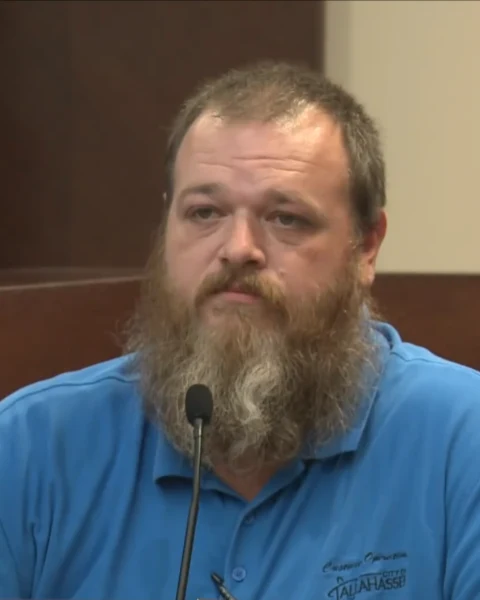
StarMetro employee who authenticated July 18, 2014 bus footage.
AppearedGarcia–Magbanua
81 lines·5 proceedings
About
Andrew Brown, a StarMetro employee, explained how the city-bus camera system operated and retained footage. He testified that the cameras on buses 505 and 707 were working on July 18, 2014, and identified State's Exhibit 125 as fair and accurate copies of images collected from those buses. The court admitted the exhibit without objection.
On cross-examination, Brown described two occupants in the Prius footage, including a passenger in a white shirt visible for roughly five to ten seconds. He said the footage did not clearly show the driver's identity, the passenger's face, clothing details, tattoos, or anything the passenger held. He also agreed that the version shown to the jury was not the original because separate videos had been combined and circles or highlights had been added. After defense counsel requested a Richardson hearing concerning the enhanced video, the court reserved the issue pending testimony from the next witness.
The State later recalled Brown to identify State's Exhibit 173 as the full footage from both buses, without circles or smaller clips. During voir dire, he testified that he watched the footage being transferred to the thumb drive and was certain it matched the material StarMetro provided in 2014. The court admitted Exhibit 173 without objection.
Trial Record (5)
No proceedings match this filter.