Skip to content
personpersonSaam ZangenehSaam ZangenehDefense attorney who served as lead counsel for Sigfredo Garcia at the Garcia–Magbanua 2019 Joint Trial.← All People
Defense· Defense team (Garcia)

Saam Zangeneh

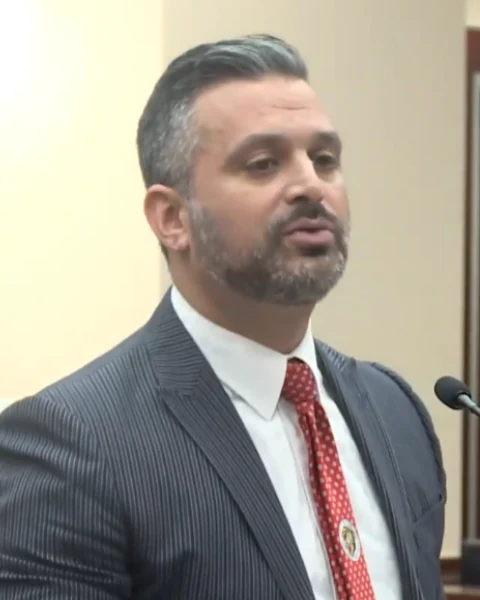
Courtroom still of Saam Zangeneh.

Defense attorney who served as lead counsel for Sigfredo Garcia at the Garcia–Magbanua 2019 Joint Trial.

3,773 lines·84 proceedings·1 mention·2 trials

About

Zangeneh's opening, cross-examinations, and motion arguments are the primary record of Sigfredo Garcia's defense theory in the 2019 joint trial. They preserve the defense challenges to Luis Rivera's incentives and to the reach of the State's cell-site, surveillance, financial, and investigative evidence.

Saam Zangeneh is a criminal defense attorney whose role in the Dan Markel prosecutions centers on his representation of Sigfredo Garcia at the Garcia–Magbanua 2019 Joint Trial before Judge Hankinson. As lead counsel for Garcia, he opened the defense by framing the State's case as resting on cooperating co-defendant Luis Rivera — a Latin Kings leader who avoided a death-penalty exposure through what counsel called the "deal of the century" — and by offering an alternative account in which Charlie Adelson solicited Rivera directly, with Garcia's trips to Tallahassee explained as drug runs. His cross-examinations pursued two steady lines: the completeness of the investigation, including untested items near the driver's door, a garage sketch that could not be reproduced in court, brief and unidentifiable vehicle sightings, and an altered surveillance compilation; and the inferential limits of the State's technical and financial proof, including what cell-tower records can and cannot show about who held a phone, the scope and minimization of the wiretap, an ATM camera that could not distinguish a deposit from a withdrawal, and the absence of purchase prices, a pre-2014 financial baseline, or any large Adelson cash withdrawal. He developed Rivera's sentencing exposure, health and literacy, and requests to leave protective confinement, and he pressed the timing and circumstances of Jeffrey Lacasse's disclosure. On motions, he sought to exclude an updated trajectory opinion as both a discovery violation and unreliable under Daubert, argued a prejudice-versus-probative-value objection to a workplace recording of Garcia, examined an FBI agent outside the jury's presence on transcription and noise-suppression methods, and raised unredacted Social Security numbers in admitted tax exhibits, prompting an order to seal and redact. The court twice admonished him for speaking objections and repeatedly directed him to move on during the Rivera cross.

Attorney insights (16)

Garcia–Magbanua88
Focus

Opening statement for Garcia positioning Rivera's cooperation agreement as the foundation of the State's case, previewing cell tower and traffic-stop evidence, and offering an alternative theory in which Charlie Adelson solicited Rivera directly.

Supporting record (1)
Focus

Cross-examination of cell site and wiretap testimony narrowing the Garcia-linked events to a seven-second call and a text, establishing that records cannot identify the phone holder, and enumerating alternative destinations in the same tower sector.

Supporting record (2)
Focus

Motion practice and evidentiary argument: exclusion of Yao's updated trajectory opinion on discovery and Daubert grounds, a Florida Rule 403 objection to the workplace recording, voir dire of Agent Sanford on FBI transcription methodology, and a request to redact Social Security numbers from admitted tax exhibits.

Supporting record (3)
Focus

Closing argument addressing the weight of service in a death penalty case and asking jurors to confine deliberation to what the evidence established.

Supporting record (1)
Credibility challenge

Challenged Luis Rivera's cooperation terms, calculating roughly 6.4 years of exposure beyond the federal sentence, introducing two November 2016 letters asking the prosecutor to move him out of protective confinement, and characterizing the agreement in opening as the 'deal of the century.'

Supporting record (2)
Credibility challenge

Alleged in opening that detectives met separately with Rivera's attorney before the recorded statement to align his account with the State's theory, and on recross pressed Isom on Rivera's May 2016 denials, the changed account by the unrecorded September 30 proffer, and pre-camera contact on the October 4 recording day; the court sustained the State's objection to that line.

Supporting record (2)
Credibility challenge

Raised bias in Sergeant Corbitt's testimony by establishing that all sixty-five prior trial appearances were for the prosecution and that he is married to a prosecutor who worked with a member of the State's trial team.

Supporting record (1)
Credibility challenge

Raised a possible bias source in Jeffrey Lacasse by developing his own alibi timing, Wendi Adelson's having named him to police, the deteriorating relationship, and his stated sense of having been wronged.

Supporting record (1)
Credibility challenge

Challenged June Umchinda's account by establishing she did not know she was recorded, could not speak to Adelson's conduct in 2013 or 2014, was hurt and angry at the time of the 2018 interview, that officers rather than she raised the stapled-cash detail, and that she spoke with Charlie Adelson the day before testifying.

Supporting record (1)
Credibility challenge

Challenged the StarMetro exhibit's integrity, drawing Brown's confirmation that the prosecution combined two clips and added vehicle highlights StarMetro's system cannot produce, and that the initialed exhibit was 'the altered video.'

Supporting record (1)
Credibility challenge

Challenged the reliability of Investigator Yao's updated six-foot trajectory opinion as both a discovery violation and unreliable methodology resting on unverified assumptions; the court found a technical, non-willful violation, denied exclusion, and overruled the Daubert challenge as addressable through cross.

Supporting record (2)
Credibility challenge

Challenged the FBI's transcription of the Dolce Vita recording on voir dire, establishing Sanford had never before authored a transcript submitted in a state proceeding and was unaware of peer review literature on the noise-suppression technology; the transcript was excluded under Martinez.

Supporting record (1)

Trial Record (84)

GMGarcia–MagbanuaSep 26, 2019 – Oct 11, 2019

Lead counsel for Sigfredo Garcia across all eleven trial days, delivering the defense opening, cross-examining the State's cooperating witness and forensic, cell-site, and financial witnesses, and arguing exclusion motions before Judge Hankinson.

Day 1

ProceduralTrial Procedures and Sequestration Rulings1highlight14lines spoken

Summary

Judge Hankinson set co-defendant trial procedures, invoked the rule of sequestration on Garcia's motion, and rejected a prosecution request to exempt the Markel family from sequestration under Marsy's Law.

Highlights (1)

Quote“They'll clearly be influenced by that. And if the government's going to be relying on their testimony, then their testimony is going to be tainted.”— Saam ZangenehGarcia's counsel articulates the core prejudice concern: Markel family members as potential voice-authentication witnesses could be influenced by exposure to opening statements or other trial evidence about the recordings they would be called to authenticate.Open in transcript →Watch this moment ▶
OpeningOpening Statement - Saam Zangeneh8highlights64lines spoken

Summary

Defense attorney Saam Zangeneh attacked Luis Rivera's credibility as a coached, incentivized cooperating witness, argued Rivera was the actual shooter acting through his Latin Kings network, and offered an alternative theory that Rivera was Charlie Adelson's drug supplier who solicited the murder directly — leaving Garcia as a peripheral figure whose only connection to the crime is Rivera's tainted account.

Highlights (8)

testimony highlightZangeneh opened by characterizing Rivera's plea deal as the 'deal of the century' — a seven-year sentence for a death-penalty defendant with a federal racketeering conviction — and asked the jury what the prosecution received in return: testimony against Sigfredo Garcia, not a mob boss, kingpin, or terrorist.Open in transcript →Watch this moment ▶
Quote“Seven years. Seven years in Florida State Prison.”— Saam ZangenehRhetorical opening that anchors the entire defense in a single number — the sentence Rivera received for participating in a first-degree murder — framing everything that follows as the product of that deal.Open in transcript →Watch this moment ▶
Quote“What they don't tell you and what they don't show you is that before the video camera turns on, law enforcement is in one room, Luis Rivera and Chuck Collins are in another. The detectives go, not to Luis Rivera, but to Chuck Collins to exchange questions, to prepare Luis Rivera for when the lights turn on, to make sure that your story fits, that your story is in unison with what the government wants you to say.”— Saam ZangenehThe defense's central credibility attack — promising the jury that Rivera's recorded statement was preceded by an off-camera coaching session, transforming the prosecution's key exhibit into evidence of coordination rather than independent recollection.Open in transcript →Watch this moment ▶
evidence eventZangeneh highlighted a cell tower evidentiary gap: records show Rivera traveling from Miami to Tallahassee during the alleged scouting trip, but no corresponding data places Garcia on that same route, directly undercutting Rivera's account of joint reconnaissance.Open in transcript →Watch this moment ▶
Show all 8 highlights
testimony highlightZangeneh laid out the defense's alternative theory: Rivera, as primero of the Latin Kings with a statewide criminal network, was Charlie Adelson's drug supplier; Adelson solicited the murder directly from Rivera; and Garcia — who resented Adelson for dating Magbanua — had every reason to refuse involvement.Open in transcript →Watch this moment ▶
Quote“And Charlie Adelson made a decision to instill and to solicit this murder for hire from Luis Rivera.”— Saam ZangenehZangeneh's alternative theory that Adelson solicited Rivera directly for the murder-for-hire plot.Open in transcript →Watch this moment ▶
admissionZangeneh conceded that Garcia and Rivera traveled to Tallahassee together but framed those trips as drug runs rather than murder planning, before submitting to the jury that Rivera was the actual shooter who enlisted a Latin Kings associate to supply the weapon — and that Garcia's presence in Tallahassee is explained by drug dealing, not conspiracy.Open in transcript →Watch this moment ▶
Quote“We will submit to you that Luis Rivera is the shooter in this case.”— Saam ZangenehThe defense's sharpest factual claim — reversing the prosecution's narrative by naming Rivera as the actual gunman, not a driver, and promising to support that position through evidence.Open in transcript →Watch this moment ▶
DirectJames GeigerGeorgia Cappleman3lines spoken

Summary

Markel's next-door neighbor described hearing a loud bang on the morning of July 18, 2014, watching a light-colored vehicle he believed was a Prius speed away from Markel's driveway, and then discovering Markel bleeding and unresponsive in his garage with the driver's side window shattered.

CrossJames GeigerSaam Zangeneh18lines spoken

Summary

Zangeneh cross-examined neighbor James Geiger to establish he had only about 10 seconds to observe the fleeing vehicle, could not identify any occupants or describe the driver, and likely stepped on glass near the car door. Magbanua's counsel declined to cross.

CrossDavid SimsSaam Zangeneh1highlight11lines spoken

Summary

Zangeneh cross-examined first-responding officer David Sims to establish he was not technically dispatched to the scene, arrived of his own initiative, and therefore cannot account for Markel's movements or the positions of items found on his person during the gap before Sims arrived.

Highlights (1)

Quote“I heard the call. My job was — I was sergeant and I was the supervisor for the Bravo district, which is basically the north/northeast side of town, and I would hear the calls on the radio and they would be dispatching officers to that call. I think Officer Brannon was the primary officer sent to that call, and I was at the station. I heard the call go out, but I was working on some paperwork and I finished that up and then I left the station to go. So I wasn't technically sent there — it was Officer Brannon's call. I just got there before.”— David SimsSims's own account establishes he self-deployed rather than being dispatched, the premise Zangeneh used to argue the pre-arrival timeline is unaccounted for.Open in transcript →Watch this moment ▶
DirectJoanne MalteseGeorgia Cappleman5lines spoken

Summary

TPD forensic specialist Joanne Maltese presented the physical evidence collected from Dan Markel's vehicle and garage, explained why DNA swabbing was prioritized over fingerprint lifting, confirmed no shell casings or projectiles were recovered, documented Bulleit Rye Whiskey and a 12:49 p.m. receipt found in Wendi Adelson's car on the day of the murder, and identified stippling on Markel's left forearm indicating close-range gunfire.

CrossJoanne MalteseSaam Zangeneh38lines spoken

Summary

Zangeneh cross-examined TPD forensic specialist Joanne Maltese to establish that no forensic testing was performed on garage items near the driver's side door and that crime-scene measurements were recorded only on an impounded sketch not produced at trial.

CrossAndrew BrownSaam Zangeneh44lines spoken

Summary

Zangeneh cross-examined StarMetro supervisor Andrew Brown to establish that Exhibit 125 is a prosecution-enhanced composite — not the original footage — and that the passenger visible through the bus camera for only five to ten seconds could not be identified beyond a white shirt.

CrossBrock DietzSaam Zangeneh35lines spoken

Summary

Zangeneh established that the prosecution directed which vehicles and persons Dietz highlighted, that Dietz made five rounds of edits with the final version delivered the week before trial, and that a roughly five-minute interval was removed from the processed Premier Gym exhibit at the prosecution's request.

Voir DireAndrew BrownSaam Zangeneh14lines spoken

Summary

Zangeneh voir-dired StarMetro supervisor Andrew Brown on whether State's Exhibit 173 contained the same original footage Brown provided in 2014; satisfied with Brown's confirmation, Zangeneh withdrew any challenge and the exhibit was admitted.

Day 2

ProceduralYao Daubert Ruling and Rivera-Attorney Depositions2highlights10lines spoken

Summary

Court denied Garcia's motion to exclude Investigator Yao's bullet trajectory opinion, overruled a Daubert challenge to its methodology, then addressed the State's late addition of Rivera's attorneys as witnesses — ordering depositions before they could testify; Magbanua's team renewed its motion to sever.

Highlights (2)

Quote“he is gearing towards making an assessment that the purported shooter — that the shooter in this case — was at least six feet tall, or around six feet tall. My client fits that description, whereas Luis Rivera is substantially shorter, and the inference that he would give would suggest that if there were two people that were involved in this shooting, and one was around the height of my client and one was around the height of Luis Rivera, that my client is in fact the shooter.”— Saam ZangenehZangeneh states plainly the strategic stakes of Yao's trajectory opinion: the height inference points directly to Garcia as the shooter and away from Rivera, giving the jury a physical basis to assign the triggerman role to his client.Open in transcript →Watch this moment ▶
Quote“He also went on to say that he doesn't know if the shooter was shooting — and his own words were — gangster style. Our position is that Luis Rivera is a gang member and potentially shoots gangster style.”— Saam ZangenehZangeneh openly characterizes Rivera as a gang member who may have fired in an atypical stance, directly attacking the reliability of Yao's height inference and the State's theory that Garcia was the triggerman.Open in transcript →Watch this moment ▶
CrossRobert Shawn YaoSaam Zangeneh2highlights36lines spoken

Summary

Garcia's lead counsel methodically extracted admissions from TPD forensic supervisor Robert Shawn Yao that his shooter-height opinion rested on unverifiable assumptions and that, by his own account, a formal trajectory analysis cannot be performed from the single fixed point available.

Highlights (2)

admissionZangeneh confirmed that using only the single available data point — the 49-inch window entry hole — Yao's prior deposition range placed the shooter between five and six feet tall, with no physical basis to favor either end of the range.Open in transcript →Watch this moment ▶
admissionWhen asked directly whether an accurate shooter-height opinion was possible without knowing the victim's position, Yao answered no, then agreed with Zangeneh's summary that the analysis cannot be performed from the physical evidence alone.Open in transcript →Watch this moment ▶
DirectCraig IsomGeorgia Cappleman16lines spoken

Summary

TPD lead detective Craig Isom traced the Markel murder investigation from crime scene to suspect identification: he documented the contentious Adelson-Markel custody dispute — including Donna Adelson's emails proposing a bribe and a religious conversion threat — then followed the Silver Pine Mica Prius through gym surveillance, city bus cameras, SunPass toll records, and a Miami rental agreement that named Luis Rivera as the renter and linked a 'brother' contact number to Sigfredo Garcia, whose children's mother was Katherine Magbanua, Charlie Adelson's girlfriend.

CrossCraig IsomSaam Zangeneh79lines spoken

Summary

Garcia's lead counsel challenged the visual reliability of the bus-camera surveillance, eliciting that the Prius on Thomasville Road could not be confirmed as the rental vehicle, its identifying features and plate were not visible, enhancement failed, and Isom did not know how many Priuses were registered in the area.

CrossCraig IsomSaam Zangeneh83lines spoken

Summary

Garcia's counsel continued cross-examination of TPD lead detective Craig Isom, exposing that the 'brother' notation on the rental contract was never verified with the rental agent, that investigators tracked only one of Garcia's phones despite knowing he had more, and that Garcia had no direct communication with Wendi, Donna, or Charlie Adelson — only a single brief call to Harvey Adelson on July 1 that likely went to voicemail.

RecrossCraig IsomSaam Zangeneh54lines spoken

Summary

Garcia's lead counsel pressed Craig Isom on Rivera's changed account, the unrecorded September 30 proffer, and whether plea negotiations were underway; Isom also said Rivera led investigators to Guy McCord Park, a surveillance location investigators had not previously known about.

DirectRonald WittAnna Norris3lines spoken

Summary

T-Mobile records custodian Ronald Witt authenticated a CD of tower-dump data from three Tallahassee cell sites, admitted as State's Exhibit 139 without defense objection.

CrossWendi AdelsonSaam Zangeneh46lines spoken

Summary

Garcia's counsel cross-examined Wendi Adelson about her brother Charlie's wealth, social lifestyle, and Miami Beach connections — ending with a pointed question implying Luis Rivera had supplied Charlie with drugs.

Day 3

ProceduralRivera-Attorney Privilege and Brannon Sequestration Issues1highlight8lines spoken

Summary

Defense challenges Rivera's attorneys for asserting privilege at deposition while claiming no recollection; court reserves ruling and orders them to appear the next morning. Officer Brannon's sequestration violation — passing prosecutors a note during Yao's testimony about shooting accuracy — leads to a denied motion to strike, with Brannon's future testimony limited to Wendi Adelson's approach to the crime scene.

Highlights (1)

procedural actionJudge Hankinson admonishes Zangeneh that re-arguing after a specific ruling is inappropriate and would draw a jury reprimand, clarifying that a made objection with a ruling constitutes full appellate preservation.Open in transcript →Watch this moment ▶
CrossThomas BalboniSaam Zangeneh2highlights30lines spoken

Summary

Garcia's counsel established that Balboni's assignment was limited to the pawn-ticket fingerprint comparison, that the transaction predated the murder by nine months, and that Balboni neither sought surveillance footage nor checked that pawnbroker's forms for Luis Rivera.

Highlights (2)

Quote“Transaction date is 10-15 of 2013.”— Thomas BalboniRecords Balboni's reading of the pawn transaction date as October 15, 2013, about nine months before the July 2014 homicide.Open in transcript →Watch this moment ▶
DirectLen HarveyGeorgia Cappleman2highlights2lines spoken

Summary

Len Harvey was recalled to authenticate State's Exhibit 177, a thumb drive containing the complete, unedited Premier gym surveillance footage from July 18, 2014, from which the previously admitted SE 124 clips were derived; the exhibit was admitted after a brief sidebar resolved a defense clarification question.

Highlights (2)

evidence eventState's Exhibit 177 — a thumb drive containing the complete, unedited Premier gym surveillance footage from July 18, 2014 — was admitted after Zangeneh raised a clarification question about potential editing, a sidebar was held, and he withdrew the objection.Open in transcript →Watch this moment ▶
Quote“Your Honor, I just want clarification. Is this a new piece of evidence, or is this something that you had that you edited for today's presentation? I don't understand exactly what it is.”— Saam ZangenehZangeneh's challenge reveals defense concern that the prosecution may have selectively edited the surveillance footage before presenting it; the question prompted a sidebar, though he ultimately withdrew the objection and the exhibit was admitted without contest.Open in transcript →Watch this moment ▶
CrossLen HarveySaam Zangeneh2highlights24lines spoken

Summary

Garcia's counsel established that Harvey reviewed about 75 percent of the gym surveillance, that some property areas were outside camera view, and that Harvey did not recall seeing Garcia exit the silver Prius and urinate in the parking lot.

Highlights (2)

impeachmentHarvey, who estimated he reviewed about 75 percent of the footage, said he did not recall seeing anyone exit the Prius to urinate and answered no when asked specifically whether he saw Sigfredo Garcia do so.Open in transcript →Watch this moment ▶
Quote“My client, Sigfredo Garcia, exiting the silver Prius and urinating in your parking lot, correct?”— Saam ZangenehThe culminating question of the cross — naming Garcia by name and framing the absence of video corroboration for a specific behavioral detail as a defense-favorable absence — to which Harvey answered no.Open in transcript →Watch this moment ▶
Jury QuestionsLen HarveyJames C. Hankinson9lines spoken

Summary

Jurors asked Harvey to describe Premier Gym's property layout and how cameras are labeled in SE 177; Garcia's counsel followed up to establish real-time monitoring and the absence of a dedicated security team on the property.

CrossBill BrannonSaam Zangeneh56lines spoken

Summary

Garcia's counsel cross-examined TPD Officer Bill Brannon on his crime scene perimeter role and van observation, establishing that Brannon had no instructions to log passing vehicles, could not confirm the driver's identity, and did not radio to have the van stopped.

CrossJeffrey LacasseSaam Zangeneh1highlight140lines spoken

Summary

Garcia's counsel cross-examined Wendi Adelson's ex-boyfriend on the circumstances of the July 13 murder-for-hire disclosure, establishing that it was a brief, contextless blurt during a relationship argument, that Lacasse never warned Markel or contacted police beforehand, and that Lacasse himself had been under suspicion and feels wronged by Wendi.

Highlights (1)

Quote“Yes.”— Jeffrey LacasseIn response to Zangeneh's direct question, Lacasse acknowledges he feels wronged by Wendi Adelson, raising a potential personal bias in his testimony about the Adelson family.Open in transcript →Watch this moment ▶
CrossSteven LutesSaam Zangeneh50lines spoken

Summary

Garcia's counsel cross-examined the JPMorgan Chase security specialist to narrow the evidentiary value of the ATM surveillance footage, establishing that the video confirms only that a silver Prius was present at the Pembroke Pines drive-up ATM on the evening of July 18, 2014 — not the transaction type, the vehicle's movements before or after the brief window, or whether additional bank camera footage was requested or reviewed.

DirectChristopher CorbittAnna Norris5lines spoken

Summary

TPD cell-phone analyst Christopher Corbitt traced Wendi Adelson's phone activity, explained how tower-dump and family-phone records led investigators to Garcia and Rivera's numbers, mapped frequent Garcia–Magbanua–Charlie contacts, and testified that Garcia's and Rivera's phone events used sectors that served the Premier Gym area.

CrossChristopher CorbittSaam Zangeneh98lines spoken

Summary

Garcia's counsel raised potential-bias questions about Corbitt's prosecution testimony history and marriage to a prosecutor, then challenged the geographic breadth of the Premier Gym sector and whether Garcia personally possessed his phone during the two murder-morning events.

DirectLuis RiveraGeorgia Cappleman9lines spoken

Summary

Rivera, a cooperating co-defendant who said he drove the getaway car, described two Tallahassee trips with Garcia, the shooting of Dan Markel, and his allegation that Magbanua relayed operational information, acknowledged the completed killing, and helped deliver $35,000.

CrossLuis RiveraSaam Zangeneh406lines spoken

Summary

Garcia's lead counsel cross-examined Rivera on his Latin Kings gang leadership and code of silence, his extensive criminal history including drug dealing and armed robbery, a deposition inconsistency on armed robbery, and the chaotic circumstances of the first reconnaissance trip to Tallahassee — which Rivera admitted involved alcohol, cocaine, speeding at 90 mph, and two firearms in the vehicle.

Day 4

ProceduralRivera Cross-Examination Limits and Recollection Procedure2highlights4lines spoken

Summary

The court limits Rivera cross-examination on unrelated bad acts and mental health, rejects wholesale admission of prior statements, and adopts jury-out recollection-refresh breaks at the end of each examination phase.

Highlights (2)

impeachmentZangeneh puts the court on notice that government phone records show Rivera sent and received over 8,000 text messages between May and October 2014, raising a potential contradiction with his testimony that he cannot read or write.Open in transcript →Watch this moment ▶
Quote“I know that Mr. Rivera did testify yesterday that he's unable to read and write, but in the government's exhibit on phone records he sent, between May of 2014 and October of 2014, over 8,000 texts sent and received, which suggests that he communicated”— Saam ZangenehDefense counsel flags a potential contradiction between Rivera's sworn literacy claim and phone-record evidence showing thousands of texts during the murder-plot period, previewing a cross-examination challenge to his credibility on that point.Open in transcript →Watch this moment ▶
CrossLuis RiveraSaam Zangeneh5highlights407lines spoken

Summary

Garcia's counsel continued cross-examining Rivera, attacking his credibility through literacy inconsistencies, prior contradictory statements about the June reconnaissance trip, mental health diagnoses, cocaine framed as self-medication, and letters Rivera wrote directly to the lead prosecutor seeking release from protective custody — while eliciting that Garcia remained deeply in love with Magbanua.

Highlights (5)

impeachmentZangeneh built a sustained literacy challenge: Rivera sent 7,885 text messages despite claiming he could not read or write, filled out the Prius rental form (Rivera said the rental agent told him where to write his name), and received passing grades in federal prison reading and writing courses (Rivera said a tutor sat next to him during the exam). The sequence drew out the limits and qualifications of Rivera's literacy claim.Open in transcript →Watch this moment ▶
impeachmentZangeneh established that Rivera had previously stated Garcia drove the entire June 4 trip and previously attributed the speeding ticket to the July trip — both accounts changed after the prosecution introduced the ticket placing Rivera at the wheel near Gainesville at 9:12 a.m. Rivera acknowledged both prior inconsistent statements.Open in transcript →Watch this moment ▶
testimony highlightZangeneh drew out that Garcia was 'crazy about' Magbanua and Rivera added unprompted that Garcia 'still is' in love with her; that Garcia strongly disliked Adelson; that Rivera believed Magbanua was 'the driving force' behind Garcia's participation; and that the post-murder call between Garcia and Magbanua concerned only payment with no mention of reconciliation.Open in transcript →Watch this moment ▶
Show all 5 highlights
emotional momentWhen Zangeneh again referenced the Latin Kings, Rivera objected forcefully in open court, saying the repeated mentions of his affiliation and location were actively endangering his life and that the gang was 'trying to do it right now.' The judge directed Zangeneh to ask straightforward, non-argumentative questions.Open in transcript →Watch this moment ▶
CrossJonathan GrossmanSaam Zangeneh29lines spoken

Summary

On cross, Grossman acknowledged a third party had purchased and painted the Prius, said both mirrors were black but could not say they had been replaced, and said he personally did not inquire whether Rivera had rented from Dollar before.

CrossKeith LelandSaam Zangeneh9lines spoken

Summary

Garcia's counsel briefly cross-examined preschool employee Leland, establishing that he could not see inside the Prius due to tinted windows and that no occupant was seen exiting the vehicle.

CrossShoddrick NoblesSaam Zangeneh105lines spoken

Summary

On cross, Nobles agreed he saw Rivera with the visible gun and took a hotel key, questioned whether the hose problem was genuine, and acknowledged counsel's assertion—without a ruling or agreement in this proceeding—that a State subpoena insulated his admission.

CrossWaldo Mesa NunezSaam Zangeneh38lines spoken

Summary

On cross, Zangeneh compared the Hyundai Sonata's plate in Exhibit 90 with fields he read from State Exhibit 87 and an FHP citation bearing the same make, model, and plate but another name; Mesa Nunez could not identify who actually drove the car.

CrossDaren SchwartzSaam Zangeneh12lines spoken

Summary

Garcia's counsel established that Rivera came to the rental counter alone — Garcia was not present — and that the 'brother' notation on the contract was based solely on Rivera's own information.

Day 5

ProceduralEvidentiary Rulings and Jury-Instruction Conference9lines spoken

Summary

Judge Hankinson ruled Garcia's opening statement did not open the door to other criminal activity evidence but did open the door to drug dealing; overruled defense objections to lesser-included instructions for second-degree murder and manslaughter; modified the firearm reclassification instruction to apply only to Garcia; and deferred the principal instruction question pending the close of the State's case.

CrossJune UmchindaSaam Zangeneh4highlights49lines spoken

Summary

Zangeneh cross-examined Charlie Adelson's ex-girlfriend to show she had no knowledge of Adelson's behavior before October 2015, that police — not she — raised the stapled-money detail, and that Adelson spoke with her the day before trial about her upcoming testimony.

Highlights (4)

Quote“I didn't even know they took what I said and put it anywhere, so.”— June UmchindaConfirms Umchinda was unaware her statements were being recorded or transcribed, directly underpinning Zangeneh's argument that she cannot establish what was said before recording began and cannot verify the transcript's completeness.Open in transcript →Watch this moment ▶
testimony highlightZangeneh establishes that because Umchinda did not know she was being recorded, she cannot tell the jury what police discussed with her before recording began — leaving open whether officers introduced the stapled-money detail prior to the captured audio.Open in transcript →Watch this moment ▶
testimony highlightZangeneh pins Umchinda's personal knowledge of Adelson to the period starting October 2015, securing concessions that she cannot speak to his cocaine use, nightclub habits, or gang contacts in 2013 or 2014 — the period surrounding the murder.Open in transcript →Watch this moment ▶
Jury QuestionsClariza LebredoJames C. Hankinson19lines spoken

Summary

Jurors asked about the Adelson Institute's voicemail-checking routine; Zangeneh followed up to probe whether Harvey Adelson could have independently accessed the office phone line, drawing a sustained objection and Lebredo's clarification that the old answering machine did not allow remote message retrieval.

CrossErika JohnsonSaam Zangeneh6lines spoken

Summary

Zangeneh's brief cross of Erika Johnson established only that Harvey Adelson owned the Adelson Institute and had the ability to forward its office phone calls to his own cell phone.

DirectChristopher CorbittAnna Norris6lines spoken

Summary

Recalled TPD cell-phone analyst Christopher Corbitt presented demonstrative maps tracing Rivera's June 2014 scouting trip to Tallahassee, Magbanua's phone placing her near the Comfort Rent-a-Car during the June rental pickup, Rivera's phone and a rental GPS placing the vehicle near Dan Markel's Trescott Drive residence on June 5th, and the July murder trip — including Garcia's number listed as 'brother' on the Hybrid rental contract and Magbanua calling Garcia at 1:56 a.m. after Charlie Adelson departed her home the night before.

CrossChristopher CorbittSaam Zangeneh70lines spoken

Summary

Garcia's counsel cross-examined TPD cell-site analyst Corbitt to limit the July murder-morning evidence to two passive phone events, establish that records cannot place Garcia on the June scouting trip, and expose a discrepancy between the 'Rivera's residence' flag on prosecution demonstrative maps and Rivera's documented home address.

Day 6

RecrossChristopher CorbittSaam Zangeneh50lines spoken

Summary

Garcia's counsel used a narrow recross to minimize the traffic citation, show that app-based communications would not appear in call-detail records, and offer an alternative reading of the iCloud chat. Corbitt did not testify that Rivera and Adelson actually used an unrecorded channel.

DirectMary HullAnna Norris6lines spoken

Summary

Forensic accountant Mary Hull reviewed financial records for Garcia, Rivera, Magbanua, and the Adelson family, describing post-murder vehicle purchases, Rivera's changed cash-withdrawal pattern, Magbanua's cash deposits, a Lexus title with no matching payment found, and Adelson Institute checks signed by Donna Adelson.

DirectMary HullAnna Norris3lines spoken

Summary

Hull documented expenses Charlie Adelson paid for Magbanua, including travel and a Mazda repair, and presented an unexplained $4,400 cash balance for breast augmentation whose source she could not trace in Magbanua's accounts. She also described an August 2014 cash-deposit peak and Adelson Institute payroll records.

CrossMary HullSaam Zangeneh74lines spoken

Summary

Garcia's counsel Zangeneh challenged forensic accountant Hull's post-murder vehicle analysis by establishing the 1984 Monte Carlo resold a year later for $600, pointing to Hull's failure to obtain purchase prices or contact sellers, exposing the investigation's limited scope, and closing with Hull's confirmation that no large Adelson cash withdrawal appeared in June–July 2014 or in 2016.

CrossOscar Jimenez Jr.Saam Zangeneh43lines spoken

Summary

Zangeneh challenged Jimenez's gang-specific knowledge and the bump's design, and established that Garcia was free and could have been wiretapped. Jimenez did not know whose phones had Title III coverage, so the cross did not establish that investigators chose not to wiretap Garcia.

ProceduralGang-Expert, Wiretap, and Dolce Vita Rulings6lines spoken

Summary

Judge Hankinson warned that calling gang expert Dr. De La Cruz risked opening the door to Rivera's recall on Garcia's other criminal activity, deferred a final ruling until the State rested, and established a general admissibility framework for approximately forty pending wiretap recordings; he also ruled the Dolce Vita undercover video admissible as a tacit admission while deferring on its transcript.

Day 7

ProceduralWiretap and Dolce Vita Transcript Rulings24lines spoken

Summary

Judge Hankinson ruled exhibit-by-exhibit on wiretap calls A through SS before the jury was seated, admitting the Charlie Adelson–Magbanua and Charlie Adelson–Garcia calls while sustaining hearsay objections to calls involving only Adelson family members; he also excluded the Dolce Vita transcript under Martinez and openly criticized Florida's conspiracy hearsay doctrine as outdated.

CrossChristopher CorbittSaam Zangeneh3highlights23lines spoken

Summary

Zangeneh's brief cross established that only two people, Charlie Adelson and Katherine Magbanua, were monitored across three handsets; Jessica Rodriguez was not intercepted even though Corbitt had associated Rivera with her residence. The cross also confirmed that minimized content is irretrievable.

Highlights (3)

testimony highlightZangeneh established that only two people, Charlie Adelson and Katherine Magbanua, were monitored across the three identified handsets and that Jessica Rodriguez was not placed under Title III intercept. Corbitt had associated Rivera with Rodriguez's residence but qualified the exact period.Open in transcript →Watch this moment ▶
testimony highlightCorbitt confirmed that the document delivered to Donna Adelson in the bump operation was designed to 'initiate chatter,' adopting Zangeneh's characterization of the bump's purpose.Open in transcript →Watch this moment ▶
Quote“whatever occurred after the minimization was initiated, that's lost data, correct?”— Saam ZangenehZangeneh framed minimized wiretap content as irrecoverably lost, a characterization Corbitt confirmed, establishing a structural gap in the recorded evidence available to the jury.Open in transcript →Watch this moment ▶
Voir DirePatrick SanfordSaam Zangeneh14lines spoken

Summary

Zangeneh cross-examined FBI Agent Sanford out of the jury's presence on his qualifications to authenticate the Dolce Vita recording transcript, drawing admissions that Sanford had never submitted a self-authored transcript in state court and was unaware of peer review for the FBI's noise-suppression technology. Judge Hankinson cut off Zangeneh's closing summation.

ProceduralGarcia FBI Interview Proffer5lines spoken

Summary

Out-of-jury-presence proffer on a May 2016 FBI interview of Sigfredo Garcia at his workplace, with Zangeneh arguing implied Miranda coercion and 403 prejudice, DeCoste raising Confrontation Clause grounds and renewing the motion to sever as to Magbanua, and DeCoste separately objecting to the late production of the interview transcript.

CrossPatrick SanfordSaam Zangeneh453lines spoken

Summary

Zangeneh cross-examined Sanford on the Rivera proffer process, investigative gaps, Garcia's actual bump response, and April 2014 texts showing Charlie Adelson knew the nickname Tuto before later claiming otherwise. Sanford did not know what discovery Rivera had seen, although he saw no reason Rivera would not have received normal case discovery.

CrossPatrick SanfordSaam Zangeneh18lines spoken

Summary

Zangeneh concluded cross by questioning the usefulness of Rivera's generic description of the gun seller, drawing a rebuke after attempting to revisit an excluded Rivera firearm incident, and obtaining Sanford's agreement that Rivera was the only person claiming Garcia fired the fatal shot.

ProceduralClosing-Argument, Wiretap, and Penalty-Phase Logistics6lines spoken

Summary

Judge Hankinson broke for the evening with the State's case unfinished; the parties agreed to a two-hour closing-argument cap per side, wiretap transcripts were directed to be marked as court exhibits, and Zangeneh disclosed a newly appointed mental-health mitigation expert for Garcia's potential penalty phase.

Day 8

Jury QuestionsPatrick SanfordJames C. Hankinson5lines spoken

Summary

Jury questions covered tax, employment, searches, and undercover contacts; follow-up showed Sanford was unaware of nightclub subpoenas and could not identify who made the hang-up call attributed to Garcia, while LL placed Garcia on a separate call nine minutes later.

CrossLouis BronsteinSaam Zangeneh25lines spoken

Summary

Zangeneh established Bronstein's junior role, that Bronstein personally received no instruction to record Garcia and Magbanua together, and that the Dolce Vita device was a laptop-sized messenger bag.

CrossMary HullSaam Zangeneh6lines spoken

Summary

Hull said Garcia's 2013-2014 account was closed, archived retrieval could be possible, and she did not have the records; the examination did not establish whether retrieval was attempted.

DirectStephen DowningSaam Zangeneh60lines spoken

Summary

Garcia's defense used Downing's June 2014 citation and qualified answers to a cocaine-impairment hypothetical to challenge Rivera's account; the proceeding did not establish that Rivera had consumed five grams before that stop.

RedirectStephen DowningSaam Zangeneh10lines spoken

Summary

Downing repeated that the citation field defaulted to 'no' and could omit actual passengers, then confirmed a 2018 deposition passage discussing the displayed notation; the record did not establish whether Rivera had a passenger.

DirectJohn SawickiSaam Zangeneh100lines spoken

Summary

Garcia's expert found large CDR/iCloud count gaps for Adelson, identified off-carrier apps, and described Magbanua's frequent historical use of the Biscayne tower; he did not establish why events were absent, any direct Adelson-Rivera contact, or Magbanua's exact July 19 location.

RedirectJohn SawickiSaam Zangeneh13lines spoken

Summary

Zangeneh established that Sawicki had reviewed none of Rivera's phones and lacked all associated numbers, then elicited general possibilities involving deleted FaceTime records and disposable phones; no Adelson-Rivera contact was established.

Day 9

CrossKatherine MagbanuaSaam Zangeneh79lines spoken

Summary

Garcia co-counsel Zangeneh cross-examines Magbanua, drawing out that Garcia despised Adelson and never helped him, that Rivera was a violent gang member and drug dealer, and that Garcia's family trip near his arrest was pre-planned — all building a defense picture in which Garcia was Adelson's rival, not his hired killer.

DirectChristopher CorbittAnna Norris5lines spoken

Summary

Recalled analyst Christopher Corbitt presented 2015 Adelson iCloud texts and a May 2016 chronology in which Magbanua texted Garcia a mechanic's number after an Adelson-Magbanua call, before Garcia's first recorded calls to that shop.

ProceduralFinal Jury-Instruction Conference35lines spoken

Summary

Judge Hankinson and counsel work through the final jury instructions for both defendants, resolving disputes over the principals instruction, the independent act instruction, a circumstantial evidence special instruction, and whether to add immunity language tied to Wendi Adelson.

Day 10

ClosingClosing Argument - Saam Zangeneh4highlights284lines spoken

Summary

Garcia's lead counsel Saam Zangeneh delivered a systematic credibility attack on Luis Rivera using a 'house inspection' metaphor, argued Rivera was the actual shooter, and told jurors the evidence pointed more substantially at the uncharged Adelson family than at Garcia.

Highlights (4)

Quote“He goes, it is ridiculous. Last three words: I helped.”— Saam ZangenehZangeneh highlighted Rivera's own closing words from a prison letter written shortly after he began cooperating — 'I helped,' not 'I told the truth' — to argue Rivera viewed his cooperation as a transaction rather than honest testimony.Open in transcript →Watch this moment ▶
Quote“A gangster killed Dan Markel. Luis Rivera killed Dan Markel.”— Saam ZangenehZangeneh's most direct statement of the alternative-shooter theory, tying Rivera's self-described gangster identity and physical positioning as the driver to the argument that Rivera fired the shots.Open in transcript →Watch this moment ▶
Quote“I would venture to say there's substantially more evidence against the Adelsons there than there is against Sigfredo Garcia. Substantially more. Motivation, documentation, ability.”— Saam ZangenehZangeneh's closing pivot directly naming the uncharged Adelson family as more heavily evidenced across three categories, arguing the prosecution's own narrative pointed away from Garcia.Open in transcript →Watch this moment ▶
Quote“Come back with, I'm not interested in buying this house.”— Saam ZangenehThe deliberate payoff of the house-inspection metaphor that opened the argument, translating the structural-defect framing into an explicit not-guilty verdict request.Open in transcript →Watch this moment ▶

Day 11

Jury InstructionJury Questions - Principal Liability and Split Verdicts11lines spoken

Summary

Jurors asked about exceptions to principal liability and the meaning of 'a crime,' then whether verdicts could be returned by defendant or count despite other deadlocks. The judge answered that there were no exceptions, asked the jury to clarify the rest of its first question, and answered yes to both split-verdict questions over Magbanua's later objection.

VerdictSigfredo Garcia Verdict and Jury Polling1highlight1line spoken

Summary

Jury found Sigfredo Garcia guilty of first-degree murder and conspiracy to commit first-degree murder, not guilty of solicitation; all twelve jurors unanimously confirmed the verdicts on polling.

Highlights (1)

jury eventAt Zangeneh's request, Judge Hankinson polls all twelve jurors individually by number; each confirms the verdicts as their own and as the verdict of the jury as a whole, and the court announces unanimous confirmation and orders the verdict filed.Open in transcript →Watch this moment ▶
KMMagbanua RetrialMay 18, 2022 – May 27, 2022

Mentioned once in a defense question that referred to him as Sigfredo Garcia's attorney and asked whether Katherine Magbanua had called him.

Day 1

CrossCraig IsomChristopher DeCosteMentioned

Summary

Defense counsel Christopher DeCoste cross-examines retired lead detective Craig Isom, first securing agreement on the case's basic family relationships and the evidence against Sigfredo Garcia and Luis Rivera, then challenging whether Isom's own investigative reports shaped Rivera's later statements implicating Katherine Magbanua, whether Magbanua's Adelson Institute paychecks reflected real work, and how thoroughly the proffer process with Rivera was documented.

Mentioned in this proceeding.